TL;DR:
- Estate planning involves organizing financial and healthcare affairs to protect assets and family during life and after death. It includes documents like wills, powers of attorney, and guardianship arrangements to prevent court control and ensure your wishes are followed. Starting early and updating regularly enhances privacy, reduces costs, and minimizes family conflict.
Estate planning is the process of arranging your financial and healthcare affairs to control and protect your assets and family during your lifetime and beyond. Most Australians think of it as writing a will, but the role of estate planning extends far further. It covers powers of attorney, healthcare directives, trusts, superannuation nominations, and guardianship arrangements. Together, these tools give you control over who manages your affairs if you cannot, and who receives your assets when you are gone. Getting this right protects your financial legacy and spares your family unnecessary cost, conflict, and delay.
What is the role of estate planning in managing assets during incapacity?
Estate planning is mostly about planning for the living. That is the insight most people miss. The majority of estate planning documents become active while you are still alive, not after your death.
When you lose capacity through illness, injury, or cognitive decline, someone must make decisions about your finances and healthcare. Without a formal plan, that someone is a court. Courts move slowly, their decisions are public record, and they may not reflect your wishes at all. A power of attorney appoints a trusted person to manage your financial affairs. An enduring guardianship or healthcare directive appoints someone to make medical decisions on your behalf. These two documents alone can prevent enormous distress for your family.
All adults aged 18+ need at least foundational estate planning to prevent courts controlling their healthcare and finances during incapacity. That applies whether you own a home or rent one, whether you have $50,000 in savings or $2 million in assets.
The risks of having no plan are concrete:
- Courts may appoint a guardian or administrator you would never have chosen.
- Probate proceedings become part of the public record, exposing your financial details to creditors and strangers.
- Delays in accessing funds can leave your family without income for months.
- Medical decisions may be made by default rules rather than your stated preferences.
Living wills and powers of attorney keep your private information out of public probate records, which are accessible to anyone. That privacy benefit alone is worth the effort of putting documents in place.
Pro Tip: Start your estate plan now, even if your affairs feel simple. Plans are living documents that evolve as your life changes, so you do not need all the answers before you begin.
How does estate planning protect your family after death?
A will directs who receives your assets. Without one, state laws determine distribution by default, and those rules rarely match what you would have chosen. A de facto partner may receive nothing. A child from a previous relationship may be overlooked. A sibling you are estranged from may inherit alongside your spouse.
The documents that protect your family after death include:
- Will. Names your beneficiaries and appoints an Executor to carry out your instructions.
- Testamentary trust. Created within a will, it holds assets for beneficiaries under conditions you set, such as protecting a child's inheritance until they reach a certain age.
- Superannuation binding nomination. Directs your super fund to pay your balance to a specific person. Super does not automatically form part of your estate.
- Enduring power of attorney. Remains active if you lose capacity, covering financial decisions up to the point of death.
- Healthcare directive. Records your medical preferences so family members are not left guessing.
Wills go through probate, which is public, costly, and can be challenged. Trusts transfer assets privately and bypass probate court entirely. For families with significant property or complex blended arrangements, a testamentary trust is often the more protective structure.
Your Executor plays a central role. Choose someone organised, trustworthy, and willing to act. Many Australians appoint a spouse or adult child, but a professional Executor is worth considering for larger or more complex estates.

Pro Tip: Review your superannuation binding nomination every three years. Funds lapse, and an outdated nomination can send your super to the wrong person or into your estate where it becomes subject to probate.
Effective estate planning for families goes beyond legal documents. It includes a clear record of your digital assets, account passwords, insurance policies, and any informal arrangements you have made. Your family should be able to find everything without having to search.
What are the financial and emotional benefits of effective estate planning?
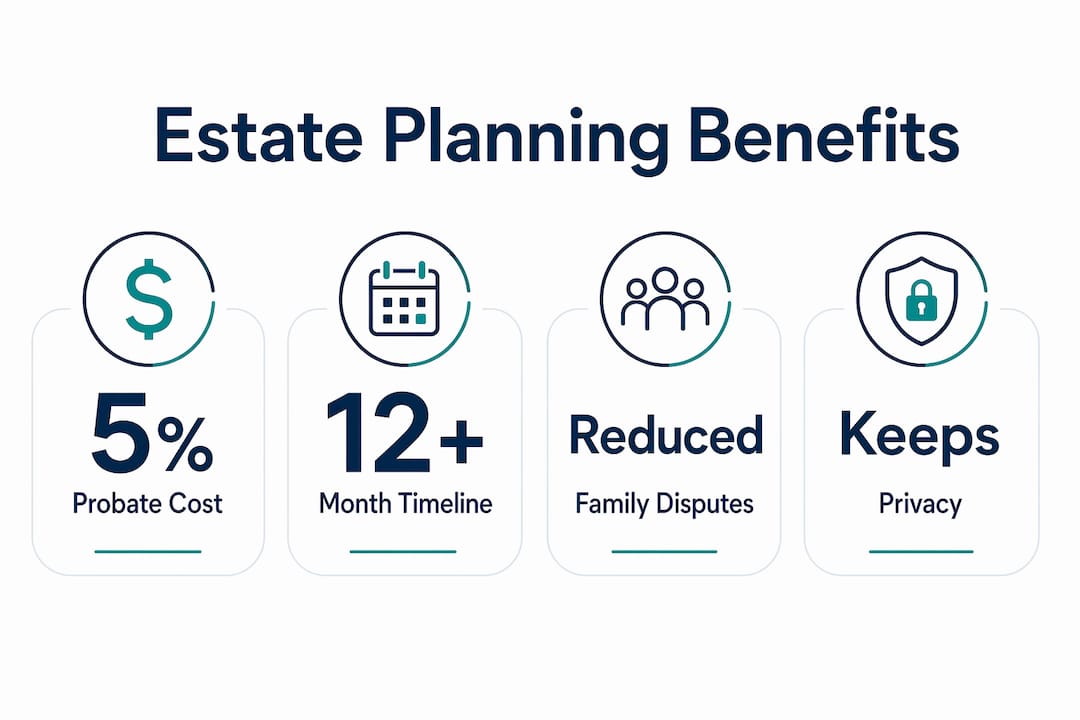
The financial case for estate planning is straightforward. Probate court fees and legal costs can consume up to 5% of an estate's value, and the process averages more than 12 months. On a $1 million estate, that is up to $50,000 in fees and a year of delays before your family receives anything.
| Scenario | Estimated cost | Typical timeline |
|---|---|---|
| No estate plan (probate required) | Up to 5% of estate value | 12+ months |
| Basic will with Executor | Lower legal fees, some probate | 6–12 months |
| Will plus testamentary trust | Moderate setup cost | 3–6 months post-probate |
| Trusts with assets transferred directly | Minimal ongoing fees | Weeks to months |
The emotional benefits are equally real. Estate planning reduces family disputes and strengthens intergenerational relationships. When your wishes are written down and legally binding, there is far less room for disagreement among siblings, partners, or extended family. Grief is hard enough without a legal battle running alongside it.
Privacy is another underrated benefit. Assets held in a trust pass directly to beneficiaries without entering the public probate record. That means your financial affairs stay between your family and their advisers, not in a searchable court database.
Pro Tip: If you own property in more than one Australian state, or hold assets overseas, get specific legal advice. Multi-jurisdictional estates add complexity that a standard will may not address.
A well-structured estate plan also reduces the administrative burden on your Executor. Clear instructions, up-to-date asset lists, and properly nominated beneficiaries mean less time spent untangling your affairs and more time for your family to grieve and recover.
What common myths stop people from planning their estate?
The most damaging myth is that estate planning is only for the wealthy or the elderly. Analysis paralysis and the belief that 'I have nothing to plan for' are among the most common reasons Australians delay, leaving them exposed to default laws that do not reflect their intentions.
Common myths worth correcting:
- "I'm too young." Incapacity can happen at any age. A 38-year-old in a car accident needs a power of attorney just as much as a 70-year-old with declining health.
- "My family knows what I want." Verbal wishes carry no legal weight. Without documents, your family cannot act on what you told them.
- "I'll do it when I have more assets." The complexity of your estate grows over time. Starting early means your plan is already in place when you need it.
- "A will covers everything." Super, jointly held property, and assets in trusts all pass outside your will. Each requires separate attention.
Plans are adaptable documents that should begin early and evolve with life changes. You do not need a perfect plan. You need a current one.
Legacy planning also extends beyond legal documents. Practical information like digital assets, pet care arrangements, and household management helps your family maintain continuity after you are gone. Recording your email accounts, subscription services, and online banking details is a practical act of care that most legal documents never address.
A retirement planning checklist that integrates estate planning steps alongside superannuation and investment decisions gives you a clearer picture of how all the pieces fit together.
Key takeaways
Effective estate planning protects your assets, your family, and your privacy both during your lifetime and after your death, reducing costs, delays, and conflict.
| Point | Details |
|---|---|
| Start early, update often | Plans are living documents; begin now and revise as your circumstances change. |
| Incapacity planning matters most | Powers of attorney and healthcare directives protect you while you are alive, not just after death. |
| Trusts outperform wills for privacy | Assets in trusts bypass probate, keeping your financial affairs out of public records. |
| Probate costs are real | Fees and delays can consume up to 5% of estate value and take more than 12 months to resolve. |
| Super needs a binding nomination | Superannuation does not automatically form part of your estate and requires a separate, current nomination. |
Estate planning is for the living, not just the departed
Most people come to estate planning thinking about what happens after they die. After years of watching Australians navigate this process, I think that framing gets it backwards.
The documents that matter most are the ones that activate while you are still here. A power of attorney, a healthcare directive, a clear record of your financial affairs. These are the tools that protect your family from having to make impossible decisions without guidance, or worse, having a court make those decisions for them.
What I find consistently underestimated is the emotional weight that falls on families when no plan exists. The legal costs are measurable. The family conflict is not. I have seen siblings stop speaking over estates that were never formally documented, not because anyone was greedy, but because no one knew what the person actually wanted.
My honest advice: do not wait until your affairs are "complex enough" to justify the effort. The right wealth planning strategies include estate planning from the moment you have dependants, a super balance, or a property. Review your plan after every major life event. Marriage, divorce, a new child, a property purchase, a business sale. Each one changes what your plan needs to say.
The goal is not a perfect document. The goal is a current one that your family can actually use.
— Jonathan
How Alphaiq supports your estate planning decisions
Understanding your estate is only part of the picture. Knowing what your superannuation balance will actually be worth at retirement changes how you structure your nominations, your trust arrangements, and your overall plan.

Alphaiq's superannuation projection tool lets you model your super balance across different contribution rates, investment returns, and retirement ages. That gives you a concrete number to work with when you sit down with your estate planning solicitor, rather than a rough guess. Alphaiq is built for self-directed Australians aged 35–65 who want real numbers behind their financial decisions, without the cost of ongoing advice. Pair your super projections with a current estate plan and you have a genuinely complete picture of your financial legacy.
FAQ
What does estate planning actually cover?
Estate planning covers wills, powers of attorney, healthcare directives, superannuation nominations, and trusts. Together, these documents control who manages your affairs during incapacity and who receives your assets after death.
Do I need an estate plan if I'm under 50?
All adults aged 18 and over benefit from foundational estate planning. Incapacity through illness or injury can occur at any age, and without documents in place, courts control your healthcare and financial decisions.
How much does probate cost without an estate plan?
Probate fees and legal costs can consume up to 5% of estate value and the process typically takes more than 12 months. A well-structured estate plan reduces both the cost and the timeline significantly.
Does my will cover my superannuation?
No. Superannuation does not automatically form part of your estate. You must lodge a binding death benefit nomination directly with your super fund to direct where your balance goes.
How often should I update my estate plan?
Review your plan after every major life event, including marriage, divorce, the birth of a child, a property purchase, or a significant change in assets. Plans are living documents and should reflect your current circumstances.