
TL;DR:
- A structured investment workflow reduces mistakes, improves decision speed, and supports portfolio growth.
- Essential tools include portfolio trackers, property management software, templates, and digital calendars.
- Regular quarterly reviews and strategic planning are key for sustainable long-term property investment success.
Managing a property portfolio without a clear workflow is one of the most common and costly mistakes self-directed Australian investors make. You might own one or two investment properties, stay on top of the basics, and still feel like you're constantly reacting rather than planning. Maintenance calls interrupt your week, tax time is chaotic, and the sense that you could be doing more with your assets lingers in the background. A well-designed investment workflow changes that picture entirely, replacing reactive stress with reliable systems that protect your time, reduce errors, and help you build wealth with far less friction.
Table of Contents
- Why a repeatable workflow is key for property investors
- Laying the groundwork: Tools, templates, and essentials for Australian property investors
- Executing your investment workflow: Step-by-step guide
- Advanced optimisation: Growing and protecting your property portfolio
- Our take: Why hands-off doesn't equal set-and-forget
- Streamline your property investment with AlphaIQ
- Frequently asked questions
Key Takeaways
| Point | Details |
|---|---|
| Systemise tasks early | Implementing a repeatable workflow before acquiring multiple properties saves time and reduces errors. |
| Quarterly reviews matter | Sticking to regular reviews helps catch issues early and boosts long-term returns. |
| Use automation wisely | Automate routine work but always verify critical decisions personally. |
| Refinance over sell | Refinancing can grow your portfolio tax-effectively compared to selling. |
| Balance tech and involvement | Best results come from combining digital tools with active owner engagement. |
Why a repeatable workflow is key for property investors
Most investors start out managing their properties the same way: a mix of phone calls, spreadsheets, and memory. It works reasonably well for one property. Add a second or third, and the cracks appear fast. Tax records go missing. Maintenance gets deferred. Opportunities to refinance or restructure are missed simply because no one scheduled a review. This ad hoc approach is not a reflection of poor effort. It is a structural problem, and the fix is structural too.
A repeatable workflow gives you a defined process for every recurring decision in your portfolio. Rather than deciding from scratch each quarter what needs attention, your workflow tells you exactly what to check, when to check it, and what to do with the findings. The result is fewer costly mistakes, faster decision-making, and far less mental load.
Here is a snapshot of the most common pain points investors report without a structured workflow:
- Scattered paperwork making tax time a stressful scramble
- Missed rental reviews leading to below-market rents
- Deferred maintenance that escalates into expensive repairs
- No system for tracking cashflow across multiple properties
- Overlooked refinancing windows when equity builds and rates shift
- Reactive rather than proactive responses to vacancy or lease renewals
The contrast between ad hoc and workflow-driven investing is stark.
| Factor | Ad hoc investing | Workflow-driven investing |
|---|---|---|
| Tax preparation | Reactive, last-minute | Ongoing, organised year-round |
| Maintenance | As problems arise | Budgeted and scheduled quarterly |
| Rent reviews | Irregular or forgotten | Structured into lease calendar |
| Portfolio review | Rarely or never | Quarterly with set agenda |
| Decision speed | Slow, emotional | Fast, data-informed |
| Scalability | Breaks down at 2+ properties | Designed to grow with you |
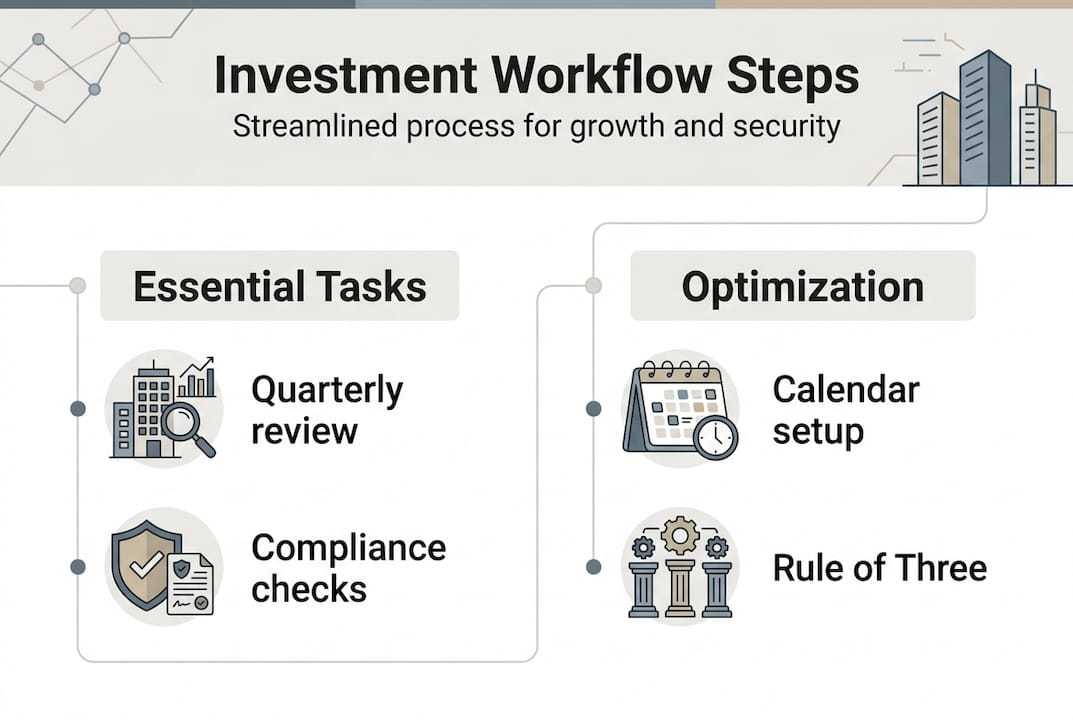
The research is clear on this point. Portfolio optimisation for busy professionals starts before you acquire a second property, using systems and automation that reflect a hands-off but engaged approach. The recommended cadence is quarterly reviews covering cashflow, maintenance budgets, and vacancy performance, guided by the Rule of Three: each week, identify the three highest-priority tasks across your portfolio and action only those. This keeps execution disciplined without overwhelming your schedule.
"Start planning your systems before your second property. Reducing friction through automation and quarterly reviews is the single most powerful thing you can do to grow a property portfolio sustainably."
Workflow also supports optimising for secure retirement, because the habits you build now determine the quality of your financial position at 60 and beyond. Hands-off control is not passive ownership. It is strategic design.
Laying the groundwork: Tools, templates, and essentials for Australian property investors
Once you accept that a workflow is worth building, the next question is practical: what do you actually need to get started? The good news is that the barrier is lower than most investors expect. The core toolkit is straightforward, and much of it is either free or already available through your existing service providers.
Here are the essential tools every self-directed Australian property investor should have in place:
- Portfolio tracker: A spreadsheet or dedicated software to log each property's value, loan balance, rental income, and expenses
- Property management software: Platforms such as PropertyMe centralise tenancy records, maintenance logs, and financial reporting
- Document templates: Standard lease review letters, maintenance request logs, and inspection checklists that you reuse consistently
- Cloud document storage: A shared folder structure for each property with subfolders for insurance, tenancy, maintenance, and finance
- Digital calendar with recurring tasks: Set quarterly review reminders, annual insurance renewal alerts, and lease expiry notifications
| Platform | Key features | Best suited for |
|---|---|---|
| PropertyMe | Tenancy management, maintenance, financials | Investors with property managers |
| Xero | Bookkeeping, tax reporting, bank feeds | DIY financial tracking |
| Google Drive | Document storage, template sharing | All investor types |
| AlphaIQ | Wealth modelling, scenario simulation, tax planning | Portfolio and retirement planning |
| REI Forms | Lease and compliance documents | Australian landlords |
The timing of when you build this infrastructure matters as much as what you build. Portfolio management research consistently shows that outsourcing routine tasks and using property management software early minimises the time spent on administration and reduces the risk of costly errors compounding over time. Waiting until you own three or four properties to get organised means you are already behind.
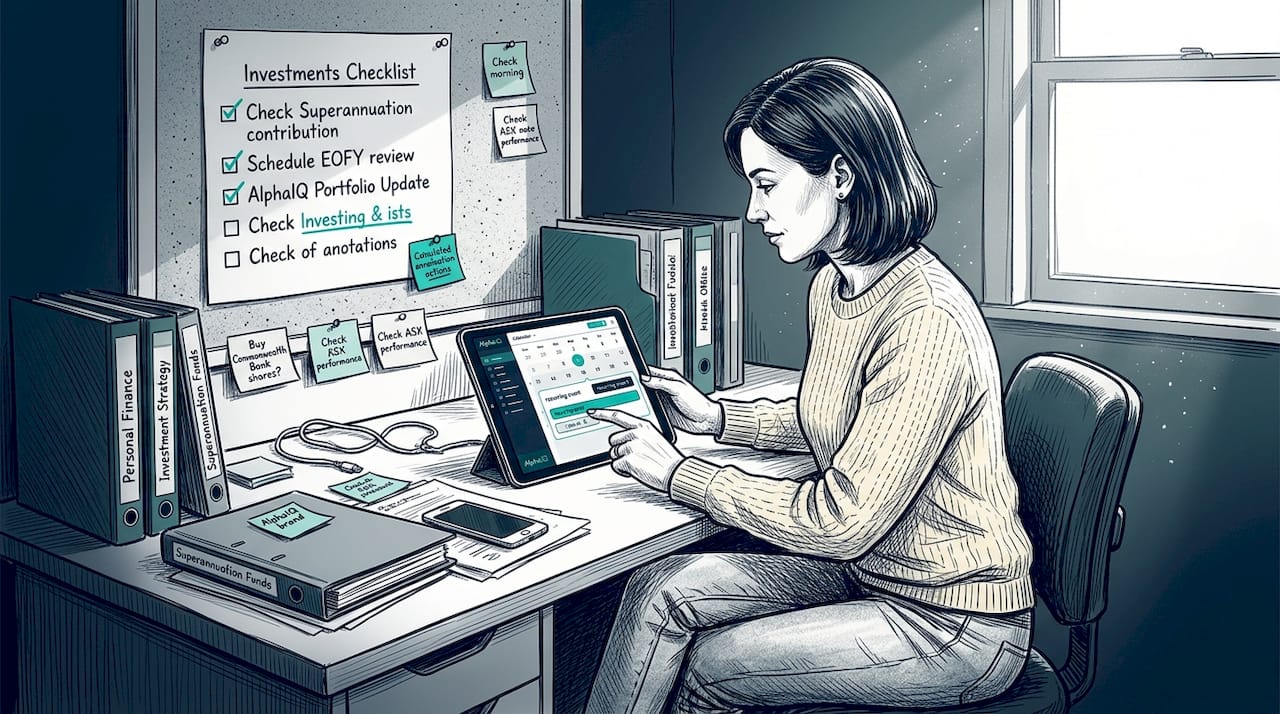
Templates deserve more credit than most investors give them. A standard rent review letter, drafted once and stored in your system, takes 90 seconds to customise and send. Without a template, the same task takes 20 minutes and is more likely to be delayed or skipped entirely. The same logic applies to inspection checklists, maintenance follow-up emails, and lease renewal reminders.
Outsourcing is the other lever. Bookkeeping, routine maintenance coordination, and property management are all tasks that a professional can handle for a predictable monthly cost. That cost is nearly always less than the value of your time and the risk of errors in each area. Consider tools for Australian investors that integrate financial modelling with your property data, so you are not managing information in disconnected silos.
Pro Tip: Set up recurring digital calendar events on the first week of each quarter. Label them "Portfolio review" and attach a standard checklist as a note. This single habit, done consistently, is worth more than any sophisticated tool you could buy.
Executing your investment workflow: Step-by-step guide
Having the right tools is the foundation. Using them consistently is the actual work. Here is a practical step-by-step workflow you can implement immediately across your Australian property portfolio.
-
Acquisition review: Before settling on any new property, complete a standardised due diligence checklist covering rental yield, vacancy rates in the suburb, body corporate fees if applicable, estimated maintenance costs, and loan serviceability under a 2% rate rise scenario.
-
Onboarding: Once a property is acquired, set up its dedicated folder, load the lease details into your property management software, add insurance and compliance dates to your calendar, and confirm your property manager understands your review expectations.
-
Monthly cashflow check: Each month, reconcile rental income against mortgage repayments, council rates, strata levies, and insurance. Flag any shortfalls immediately rather than letting them accumulate.
-
Quarterly portfolio review: This is the centrepiece of your workflow. Cover cashflow performance across all properties, maintenance budget tracking, upcoming lease renewals, vacancy exposure, and any refinancing opportunities based on current valuations.
-
Annual tax and compliance audit: Work with your accountant to review depreciation schedules, confirm all deductions are captured, and assess whether your ownership structure remains appropriate for your goals.
-
Strategic review: Once a year, step back from operations and ask whether your portfolio is still aligned with your retirement timeline, risk tolerance, and growth targets.
Statistic callout: Budget at least 1% of each property's value per year for maintenance. On a $700,000 property, that is $7,000 annually, allocated quarterly to cover routine upkeep and avoid large reactive repair bills.
Common execution errors include skipping quarterly reviews during busy periods (which breaks the system), overcomplicating the process with too many tools, and ignoring cashflow data until a problem becomes urgent. Simplicity is a feature, not a compromise.
Pro Tip: Apply the Rule of Three each week. Identify the three most important property tasks on your list and complete only those before adding new ones. This discipline keeps your workflow moving without letting it expand into a second job.
Compliance checks should sit inside your quarterly review, not be treated as a separate event. Confirm landlord insurance is current, that smoke alarms meet local requirements, and that any outstanding maintenance items have not crossed into liability territory. For a deeper understanding of how portfolio decisions affect your overall returns, reviewing the mechanics of explaining investment returns will sharpen your quarterly analysis. Investors who manage portfolio concentration risk well also build a regular check on geographic and asset-type exposure into their annual review.
Advanced optimisation: Growing and protecting your property portfolio
Once your workflow is running smoothly, the question shifts from management to growth. This is where experienced investors separate themselves from the pack, not through greater risk-taking, but through smarter positioning and consistent discipline.
Location selection is more nuanced in 2026 than it was a decade ago. Supply dynamics now matter more than interest rate cycles in many markets. A suburb with a structural shortage of rental stock will outperform in yield and capital growth even if rates remain elevated, while a well-located apartment in an oversupplied postcode may underperform regardless of rate cuts. Prioritising structural supply shortage over broader economic narratives gives you a more reliable framework for acquisition decisions.
Building and maintaining a cash buffer is non-negotiable. A reserve of three to six months of holding costs across your portfolio protects you during vacancy periods, unexpected repairs, or rate rises. This "war chest" is not idle money. It is active risk management that allows you to hold quality assets through short-term market noise rather than being forced to sell at a poor time.
Renovation to manufacture equity is another advanced tactic worth understanding. A targeted cosmetic renovation, new kitchen surfaces, fresh paint, updated flooring, can lift a property's value and rental income without the cost or disruption of a full renovation. This strategy lets you access equity through refinancing rather than selling, preserving your ownership and avoiding capital gains tax (CGT) at the point of access.
"Refinancing to access equity, rather than selling, keeps your asset base intact and avoids triggering a CGT event. Over a long portfolio-building phase, this distinction compounds significantly in your favour."
Consider the risks that advanced investors actively manage:
- Overconcentration in a single suburb or property type
- Underinsurance as property values rise faster than policy limits
- Cashflow shocks from simultaneous vacancies across multiple properties
- Interest rate sensitivity on variable-rate loans without adequate buffers
- Regulatory changes affecting negative gearing or depreciation rules
Digital tools and AI can support advanced portfolio management, but they require human oversight. Automated valuation models provide useful reference points but can be significantly wrong in thinly traded markets. Regional properties frequently outperform capital cities in yield and even growth for self-directed investors who understand their local market well, precisely because less institutional competition exists. Understanding how RBA rate changes affect your holding costs and borrowing capacity should be a standing agenda item in your annual strategic review. For investors focused on maximising assets across all vehicle types, property workflow optimisation is one component of a broader wealth architecture.
Our take: Why hands-off doesn't equal set-and-forget
There is a persistent myth in Australian property circles that good portfolio design eventually runs itself. The logic goes: hire a property manager, set up direct debits, and let the assets grow. It sounds appealing, and parts of it are true. But this framing causes real damage to real portfolios, and we see it consistently.
The investors who burn out or underperform are not always the ones doing too much. Many are the ones doing too little, relying on a property manager to catch every issue, trusting that their accountant is proactively optimising their tax position, and assuming that no news is good news. In practice, property managers manage tenancies, not your wealth strategy. Accountants file returns, not portfolio reviews.
A realistic hands-off approach means designing a system that requires strategic check-ins, not constant attention. Your quarterly review might take two hours. Your monthly cashflow check might take 20 minutes. The point is that you are looking at the numbers with your own eyes, drawing your own conclusions, and making decisions from a position of knowledge rather than assumption.
Workflow is also an adaptive discipline. The system you build for one property will need adjustment at three, and again at five. Markets change, tax rules shift, and your personal cashflow position evolves. A workflow that is genuinely serving you will evolve too. For investors focused on long-term optimisation, this adaptive mindset is what distinguishes portfolios that compound quietly into retirement from those that plateau or create problems.
Start small. One checklist. One quarterly calendar event. One cloud folder. Build from there, iterate as you learn, and stay engaged with your own numbers.
Streamline your property investment with AlphaIQ
Putting a workflow in place is a powerful first step. Connecting that workflow to your broader financial picture is what turns a good investment habit into a genuine wealth strategy.

AlphaIQ is built for exactly this. The AlphaIQ platform brings together property, superannuation, investment, and retirement modelling in one place, so you can see how your portfolio decisions ripple through your entire financial position. Use the superannuation calculator to model how your property income interacts with your super contributions, or explore the debt recycling calculator to see whether restructuring your loans could improve your tax position. It is the kind of clarity that used to require a financial planner, now available on your own terms.
Frequently asked questions
What is the most important step in a property investment workflow?
Consistently scheduling and completing quarterly reviews covering cashflow, maintenance budgets, and vacancy performance is the single most critical habit for reducing mistakes and maximising long-term returns.
How can I automate routine property investment tasks?
Property management software such as PropertyMe, combined with outsourced bookkeeping and a property manager, handles the bulk of routine administration and significantly reduces the risk of errors.
Is it better to sell or refinance for accessing equity in my portfolio?
Refinancing is generally the better option because it lets you access equity without CGT, keeping your asset base intact and deferring any tax event to a future sale on your own terms.
How do I manage risk in a property investment workflow?
Build and maintain cash buffers, review concentration risk across your portfolio regularly, and check insurance coverage at least annually to ensure it keeps pace with rising property values.