
TL;DR:
- Your investment horizon, the time you plan to hold funds before needing them, shapes your entire financial strategy and risk management. Accurate goal-specific horizons enable appropriate asset allocation and prevent costly mistakes caused by ignoring the dynamic nature of your timelines. Managing multiple horizons with a segmented bucket approach and regular reviews helps Australians optimize growth while maintaining necessary capital protection.
Your investment horizon is defined as the length of time you plan to hold an investment before needing to access the funds, and it is the single most important factor shaping your entire financial strategy. Whether you are saving for a home deposit, your children's education, or a comfortable retirement, every portfolio decision flows from this one number. Sources including Investopedia, Chase, and SoFi all confirm that time horizon shapes risk tolerance more directly than age, income, or even the amount you invest. Getting this concept right is the foundation of sound financial planning for Australians aged 30 to 60.
What is investment horizon and why does it matter?
An investment horizon is the period you expect to hold an investment to reach a specific financial goal, typically classified as short term (under five years), medium term (three to ten years), or long term (ten years or more). These categories are not rigid, and some overlap exists depending on your goals, but the buckets provide a practical framework for decision-making. The definition of investment horizon goes beyond a simple countdown clock. It determines how much volatility you can afford to absorb, which asset classes are appropriate, and when you need liquidity.
The importance of investment horizon becomes clear when you consider what happens without it. An investor who puts retirement savings into cash because they feel nervous about markets may be protecting against short-term losses while guaranteeing long-term underperformance. Conversely, someone who parks a home deposit fund in high-growth equities risks a market downturn wiping out years of savings just before they need the money. Both errors stem from ignoring the relationship between time and risk.
SoFi notes that time horizon influences risk tolerance more than almost any other factor in financial planning. This means your horizon is not just a planning detail. It is the lens through which every investment decision should be evaluated.
How does your horizon affect risk tolerance and portfolio choices?
The relationship between time and risk is direct and well established. A longer horizon gives your portfolio time to recover from downturns, which means you can accept more volatility in exchange for higher growth potential. A shorter horizon leaves little room for recovery, so capital preservation takes priority over growth.
Here is how the three horizon categories translate into practical portfolio behaviour:
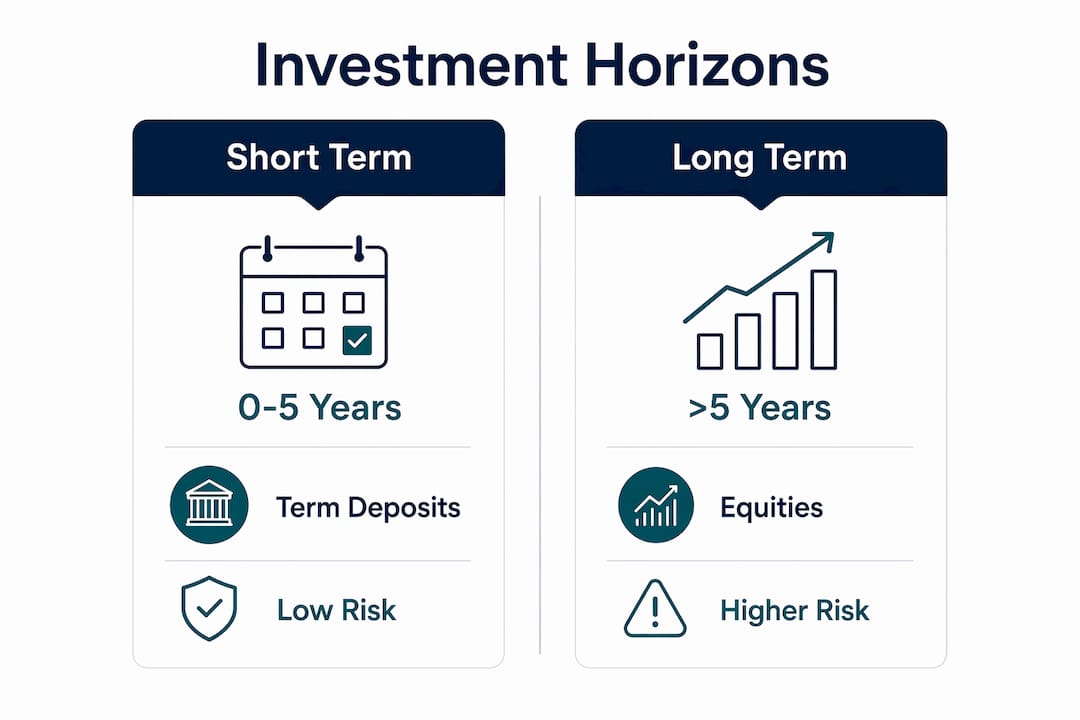
- Short term (under five years): Capital preservation is the primary goal. Suitable assets include high-interest savings accounts, term deposits, government bonds, and money market funds. Equities are generally inappropriate because a market correction could force you to sell at a loss before recovery.
- Medium term (three to ten years): A balanced approach works best here. A mix of growth assets such as diversified share funds and defensive assets such as bonds and property trusts allows for moderate growth while managing downside risk. This is a common horizon for goals like funding a renovation or building a business.
- Long term (ten or more years): Growth-focused allocations are appropriate. Australian and international equities, property, and infrastructure assets benefit from compounding over time. Even so, diversification remains essential regardless of how long your horizon extends.
Understanding investment risk and how it interacts with your timeline is the practical starting point for building any portfolio.
Pro Tip: If you find your risk tolerance feels lower than your horizon suggests it should be, that is often a signal to revisit your goal timeline rather than automatically shifting to conservative assets. Extending a goal by two or three years can meaningfully change the appropriate asset mix.
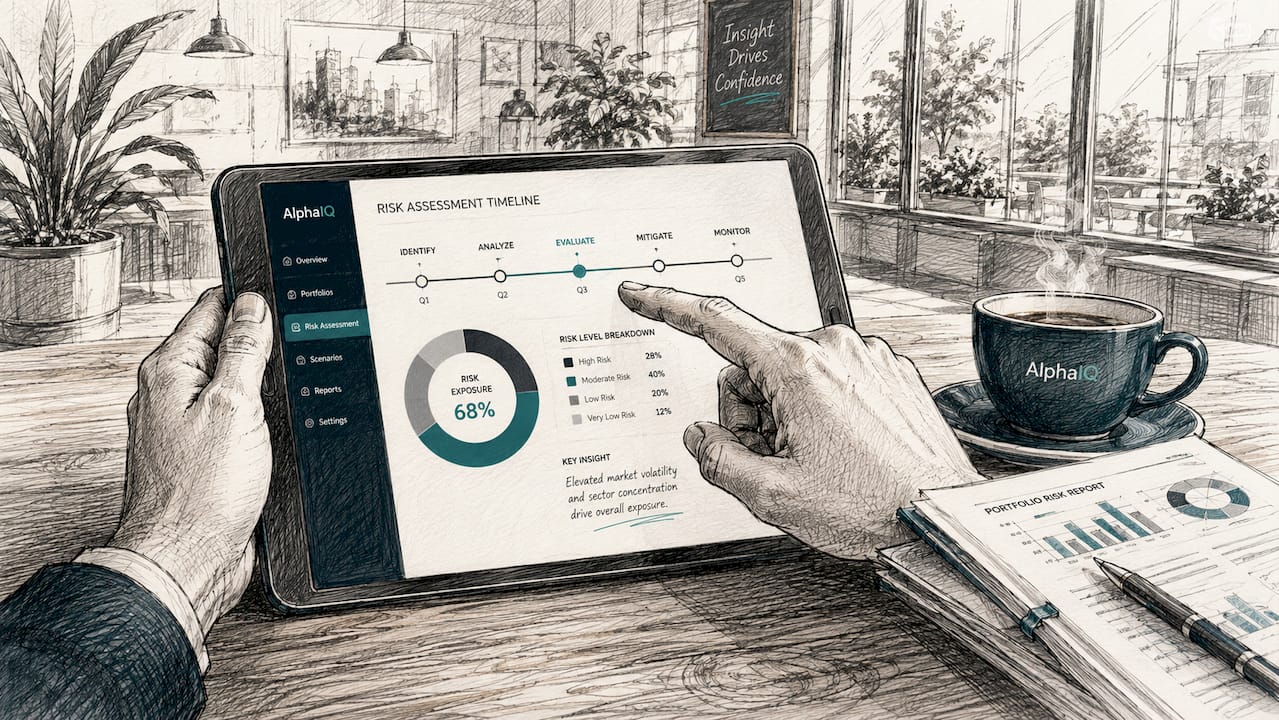
How to choose investment horizon based on your goals
Choosing the right investment horizon is not simply a matter of subtracting your current age from 65. Chase confirms that goal-specific horizons are far more accurate than age-based rules of thumb, because two people of the same age can have completely different timelines and financial needs. A 45-year-old planning to retire at 60 has a 15-year horizon for retirement savings, but may simultaneously have a three-year horizon for a planned property purchase and a seven-year horizon for a child's university fees.
Follow these steps to identify your own horizons clearly:
- List every financial goal you have. Include retirement, property, education, travel, business, and any other significant expenditure you anticipate. Be specific about amounts and target dates.
- Assign a timeline to each goal. Calculate the number of years from today to when you will need the funds. This is your horizon for that goal.
- Categorise each goal as short, medium, or long term using the standard buckets. This tells you the appropriate risk level for the money allocated to each goal.
- Review your horizons after major life changes. A job change, new child, divorce, or inheritance all shift your financial picture. SoFi notes that relying on age alone for horizon estimation is ineffective precisely because personal circumstances vary so widely.
- Adjust allocations as goal dates approach. A long-term goal becomes a medium-term goal over time, and your portfolio should reflect that shift progressively rather than all at once.
For Australians in their 40s and 50s, this process often reveals that superannuation is not the only long-term asset in play. Investment properties, share portfolios, and business interests each carry their own horizon and require separate thinking. Exploring investment strategy examples tailored to the Australian context can help you see how other investors in similar situations have structured their goals.
Common mistakes investors make with investment horizons
Misunderstanding or ignoring investment horizons is one of the most consistent sources of poor financial outcomes. These are the errors that appear most frequently, and the ones that are most avoidable:
- Using age as a proxy for horizon. The old rule that you should hold a percentage of bonds equal to your age is outdated and often wrong. A 55-year-old with a defined benefit pension and no debt may have a much longer effective horizon than a 40-year-old with significant liabilities and a five-year retirement target.
- Failing to shift allocations as goals near. Chase identifies this as a leading cause of losses near withdrawal dates. Investors who maintain high equity exposure right up to when they need funds risk a market downturn forcing them to sell at depressed prices.
- Treating superannuation as a single bucket. Your super balance serves multiple purposes across different timeframes. The portion you will draw in the first five years of retirement has a very different horizon to the portion you will not touch for twenty years.
- Reacting emotionally to market volatility. Short-term market swings feel significant in the moment but are largely irrelevant to a ten or fifteen-year horizon. Selling during a downturn converts a paper loss into a real one and permanently removes the capital from the recovery.
Pro Tip: Set a calendar reminder every twelve months to review each of your goal horizons. A single annual check-in is enough to catch drift before it becomes a problem.
Developing a clear investment risk assessment process helps you stay objective when markets move against you.
Practical strategies for Australian investors managing multiple horizons
The most effective way to manage multiple horizons simultaneously is the bucket strategy. This approach segments your portfolio into distinct pools, each matched to a specific timeframe and risk level. Chase confirms that multiple horizon buckets allow you to take appropriate risk in each segment without letting short-term needs compromise long-term growth.
Here is how the bucket approach maps to asset classes in the Australian context:
| Horizon | Timeframe | Suitable assets | Risk level |
|---|---|---|---|
| Short term | 0 to 5 years | Term deposits, high-interest savings, government bonds | Low |
| Medium term | 3 to 10 years | Diversified share funds, listed property trusts, balanced super options | Moderate |
| Long term | 10 or more years | Australian and international equities, infrastructure, growth super options | Higher |
For Australian investors, superannuation adds a layer of complexity that most generic frameworks ignore. Your preservation age (currently 60 for most Australians) defines when you can access super, which means the portion of your super balance you will draw before age 70 has a different effective horizon to the portion you will leave invested longer. Choosing between growth, balanced, and conservative super options should reflect this segmentation rather than a single blanket setting.
Regular rebalancing is the mechanism that keeps your bucket strategy on track. As markets move, allocations drift away from their targets. An annual rebalance restores the intended risk profile for each bucket. Finhelp notes that horizon should be reviewed after life changes, and rebalancing at the same time is an efficient way to address both at once. For a deeper look at how to structure your holdings, the principles behind long-term wealth strategies for Australians offer a useful complement to the bucket framework.
Key takeaways
Your investment horizon is the primary driver of every portfolio decision, and aligning each goal with its own timeframe is the most reliable way to manage risk and build wealth over time.
| Point | Details |
|---|---|
| Define horizon by goal, not age | Each financial goal carries its own timeline; use that date, not your birthday, to set risk levels. |
| Match assets to timeframes | Short-term goals need capital protection; long-term goals can absorb volatility for higher growth. |
| Use the bucket strategy | Segment your portfolio by horizon to take appropriate risk in each pool without compromising near-term needs. |
| Adjust as goals approach | Shift allocations progressively toward lower risk as each goal date draws closer to avoid forced losses. |
| Review after life changes | A job change, new dependent, or property purchase alters your horizons and requires a portfolio update. |
Why I think most investors underestimate how dynamic their horizon really is
Most articles on investment horizon treat it as a static number you set once and revisit at retirement. In practice, your horizon is one of the most dynamic variables in your financial life, and treating it as fixed is where most self-directed investors quietly go wrong.
I have seen investors in their early 50s still running the same asset allocation they set at 40, simply because nothing had prompted them to revisit it. Their retirement date had moved closer, a property had been paid off, and their income had grown, but the portfolio had not shifted to reflect any of it. The horizon had changed substantially. The strategy had not.
The other pattern worth naming is the tendency to treat superannuation as a single long-term bucket when it is actually several buckets stacked on top of each other. The money you will draw at 62 has a very different risk profile to the money you will not touch until 75. Treating them identically means either taking too much risk with near-term funds or leaving long-term funds too conservative to grow meaningfully.
Technology has made it genuinely easier to model these scenarios without paying for ongoing advice. Platforms that let you run projections across multiple goals and timeframes give you the clarity to make these adjustments with confidence rather than guesswork. The discipline of reviewing your horizons annually, and adjusting allocations accordingly, is what separates investors who reach their goals from those who fall short.
— Jonathan
Plan your investment horizons with Alphaiq
Alphaiq is built for Australian investors who want to model their financial position across multiple goals and timeframes without the cost of ongoing advice.

The platform lets you map your superannuation, property, and investment portfolios against specific goal dates, so you can see exactly how your current allocations align with each horizon. Use the Alphaiq super calculator to project your superannuation balance against your retirement timeline, or explore the full Alphaiq wealth platform to model scenarios across all your financial goals. If you are ready to align your portfolio with your actual timelines, Alphaiq gives you the numbers to do it with confidence.
FAQ
What is the standard definition of investment horizon?
An investment horizon is the length of time you intend to hold an investment before needing to access the funds. It is typically classified as short term (under five years), medium term (three to ten years), or long term (ten or more years).
How does investment horizon affect risk tolerance?
A longer horizon allows you to accept more volatility because your portfolio has time to recover from downturns. A shorter horizon requires more conservative allocations to protect capital you will need soon.
Can you have more than one investment horizon at the same time?
Yes. Most investors manage several simultaneous horizons, one for retirement, one for a property purchase, one for education costs, and each goal should have its own allocation matched to its specific timeframe.
What is the biggest mistake investors make with their investment horizon?
Failing to adjust allocations as a goal date approaches is the most common and costly error. Maintaining high equity exposure close to a withdrawal date risks forced selling during a market downturn.
How often should you review your investment horizon?
Review your horizons at least once a year and after any significant life change such as a new job, property purchase, or change in family circumstances. Adjusting your horizon and rebalancing your portfolio at the same time keeps your strategy aligned with your current goals.