TL;DR:
- Ethical investing aligns investment choices with moral, social, and environmental values using frameworks like ESG, SRI, and impact investing. Studies show sustainable funds often outperform traditional ones, and due diligence is essential to avoid greenwashing. Clear values and diversification lay the foundation for confident, value-driven portfolios.
Ethical investing is defined as making investment decisions based on your moral, social, and environmental values alongside financial goals. Known formally as Socially Responsible Investing (SRI), it has grown from a niche preference into a mainstream strategy, with trillions of dollars now invested using socially responsible criteria globally. For Australian investors aged 30 to 50, this approach offers a way to grow wealth without compromising on what matters to you. The three core frameworks are Environmental, Social and Governance (ESG) screening, SRI, and impact investing. Each gives you a different lever to align your portfolio with your principles.
What is ethical investing and how does it work?
Ethical investing works by applying filters to your investment decisions, either excluding industries you find harmful or actively selecting companies that meet defined standards. The practice sits within the broader category of responsible investing, which also includes ESG integration and impact investing. Understanding the difference between these terms matters because each one shapes how your money is deployed.

ESG investing evaluates companies on three dimensions: their environmental practices (carbon emissions, water use), social conduct (labour standards, community impact), and governance structures (board diversity, executive pay). SRI takes a more values-driven approach, often rooted in religious or ethical traditions, and typically uses exclusionary screening to avoid sectors like gambling or alcohol. Impact investing goes further still, directing capital toward projects with measurable positive outcomes, such as affordable housing or renewable energy infrastructure.
The UK government's green gilt programme, which raised £43.4 billion for environmental projects between 2021 and 2025, is a clear example of impact investing at scale. That figure demonstrates how significant institutional appetite for values-aligned capital has become. For individual investors, the same logic applies at a portfolio level.
What ethical investment strategies are available to you?
Three primary strategies define how ethical investing is implemented in practice.
- Negative (exclusionary) screening removes companies or entire industries from your portfolio. Common exclusions include tobacco manufacturers, fossil fuel producers, weapons suppliers, and gambling operators. This is the most straightforward approach and the one most investors start with.
- Positive (ESG) screening actively selects companies with strong environmental, social, and governance records. Rather than simply avoiding harm, you are directing capital toward businesses that demonstrate responsible practices. An ESG-screened exchange-traded fund (ETF) on the ASX, for example, might hold companies with low carbon intensity and strong workplace safety records.
- Impact investing targets measurable social or environmental outcomes alongside financial returns. This can include allocation to projects in clean energy, social housing, or microfinance. Impact funds typically report on outcomes, not just financial performance.
Each strategy can be applied through managed funds, ETFs, or direct share portfolios. Many Australian investors blend all three, using exclusionary screening as a baseline and adding ESG-positive holdings for growth.
Pro Tip: Before selecting any ethical fund, download its product disclosure statement (PDS) and check the actual holdings list. Fund names and marketing materials can be misleading. The holdings list tells you exactly where your money goes.
Do the benefits of ethical investing stack up financially?
The most persistent myth about ethical investing is that values alignment costs you returns. Studies from 2018 to 2025 indicate sustainable funds often outperformed traditional funds, and showed lower downside risk during turbulent markets. This matters because it reframes ethical investing not as a sacrifice but as a considered risk management decision.
Ethical investing reveals hidden governance and environmental risks that traditional financial analysis frequently misses. A company with poor labour practices or weak environmental controls carries regulatory and reputational risk that does not always appear on a balance sheet. ESG analysis surfaces these risks early, which is why institutional investors increasingly treat it as a standard due diligence tool.
The table below summarises the key benefits across financial and non-financial dimensions.
| Benefit | What it means for your portfolio |
|---|---|
| Competitive returns | Sustainable funds have matched or exceeded traditional benchmarks in multiple studies |
| Lower downside risk | ESG-screened portfolios showed greater resilience during market downturns |
| Hidden risk identification | ESG analysis flags governance and environmental risks before they become financial losses |
| Values alignment | Your capital actively supports industries and practices you believe in |
| Long-term resilience | Companies with strong ESG practices tend to demonstrate greater operational stability |
Aligning ethics with investments does not require sacrificing returns. The data consistently supports this, and the growing number of institutional allocators using ESG criteria reinforces it further.
How to invest ethically: a practical starting point
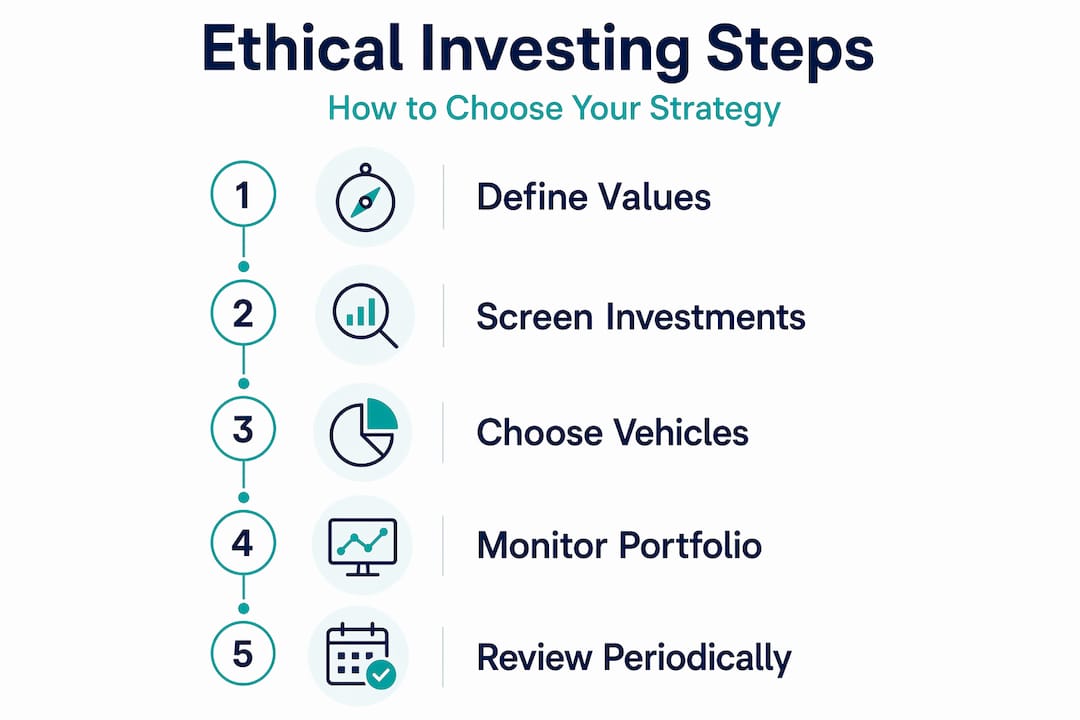
Building an ethical portfolio is a structured process. Clarity about your values comes first, followed by fund selection, diversification, and ongoing review.
- Define your ethical red lines. Clarifying which industries or causes you want to exclude or support is the foundation of your strategy. Common red lines include fossil fuels, tobacco, weapons, and companies with poor labour records. Write these down before you look at a single fund.
- Research ESG-screened funds and ETFs. The ASX lists a growing range of responsible investment ETFs. Look for funds that publish their holdings, report on ESG criteria, and have a clear investment mandate. Compare their expense ratios and historical performance against relevant benchmarks.
- Diversify across sectors and asset classes. Diversification avoids the volatility that comes from concentrating in a single ethical theme, such as only holding clean energy stocks. Blend ethical equities with bonds, property, and international exposure to manage risk effectively. You can explore asset allocation principles to build a balanced structure.
- Review fund transparency and reporting. Prioritise fund managers who publish annual impact or ESG reports. Transparency in reporting is a strong indicator of genuine commitment rather than marketing positioning.
- Start with what you can manage. Defining personal values first helps avoid paralysis by analysis. You do not need to overhaul your entire portfolio at once. Begin with one or two ethical ETFs and build from there as your confidence grows.
Pro Tip: Use Morningstar's Sustainability Rating or the Responsible Investment Association Australasia (RIAA) certification mark to quickly identify funds with verified ethical credentials. These tools save significant research time.
What risks and challenges should you watch for?
Ethical investing carries specific risks that differ from conventional portfolio management. Knowing them in advance puts you in a stronger position.
- Greenwashing is the most significant risk. Investors must review fund holdings rather than rely on fund names or marketing claims. A fund labelled "sustainable" or "green" may still hold fossil fuel companies if its mandate is loosely defined.
- Subjectivity in ethics creates complexity. What one investor considers ethical, another may not. Some ESG funds include nuclear energy as a low-carbon option; others exclude it entirely. Your personal criteria may not match a fund's criteria exactly, which is why reviewing the PDS is non-negotiable.
- Sector concentration risk is real. A portfolio heavily weighted toward clean energy or technology ESG stocks can be volatile when those sectors underperform. Blending ethical holdings with broader market exposure reduces this risk.
- Evolving standards mean that what qualifies as ethical changes over time. A company that met ESG criteria two years ago may not meet them today. Regular portfolio reviews keep your holdings aligned with your current values.
Pro Tip: Set a calendar reminder to review your ethical fund holdings every six months. Check for any changes to the fund's mandate, holdings, or ESG rating. Standards evolve, and your portfolio should reflect that.
Ethical investment examples and fund types for Australian investors
Ethical funds typically avoid industries such as tobacco, weapons, fossil fuels, and gambling, while including sectors like clean energy, companies with fair wage practices, and businesses with transparent governance. In Australia, investors have access to a growing range of products across several fund types.
The Dow Jones Sustainability Index (DJSI) is one of the most widely referenced benchmarks for ESG-compliant companies globally. Australian fund managers including Australian Ethical Investment, Pendal, and Betashares offer managed funds and ETFs that track or reference ESG criteria. The RIAA independently certifies responsible investment products in Australia, giving investors a reliable verification standard.
The table below compares the main fund types available to Australian ethical investors.
| Fund type | How it works | Best suited to |
|---|---|---|
| Ethical managed fund | Actively managed portfolio applying ESG or SRI criteria | Investors wanting professional stock selection |
| ESG ETF | Passively tracks an ESG index on the ASX | Cost-conscious investors seeking broad exposure |
| Impact fund | Targets measurable social or environmental outcomes | Investors prioritising direct positive impact |
| Green bonds | Fixed-income products funding environmental projects | Conservative investors seeking stable income |
| Superannuation (ethical option) | Super fund with ESG-screened investment options | Australians integrating ethics into retirement savings |
Superannuation is worth highlighting specifically. Many Australian super funds now offer ethical or sustainable investment options within their default menu. Switching your super to an ethical option is one of the highest-impact changes you can make, given the scale of capital involved over a working lifetime.
Key takeaways
Ethical investing delivers competitive financial returns while aligning your capital with personal values, provided you apply clear criteria, verify fund holdings, and diversify across sectors.
| Point | Details |
|---|---|
| Definition and frameworks | Ethical investing uses ESG, SRI, and impact investing to align money with values and financial goals. |
| Performance is competitive | Studies from 2018 to 2025 show sustainable funds often matched or outperformed traditional benchmarks. |
| Greenwashing is a real risk | Always review fund holdings and PDS documents, not just fund names or marketing materials. |
| Start with values clarity | Define your ethical red lines before selecting any fund to avoid confusion and poor alignment. |
| Diversification still matters | Blending ethical and traditional assets reduces sector concentration risk and improves portfolio resilience. |
Why values clarity matters more than fund selection
I have spoken with many Australian investors who approach ethical investing the wrong way around. They start by searching for the best ESG fund, then work backwards to justify why it fits their values. That process almost always leads to disappointment, because no fund will perfectly match your criteria unless you have defined those criteria first.
The investors who get this right spend time upfront writing down what they will not support and what they actively want to fund. That list becomes their filter. It makes fund selection faster, reduces second-guessing, and means you are less likely to abandon your strategy when markets get uncomfortable.
I also think the financial performance debate is largely settled. The evidence from multiple studies across multiple market cycles is consistent: ethical investing does not require you to accept lower returns. What it does require is discipline in due diligence, particularly around greenwashing. The investment risk assessment process for ethical funds is not fundamentally different from any other asset class. You are still assessing management quality, financial fundamentals, and sector exposure. ESG criteria add another layer of analysis, not a replacement for it.
Start small if you need to. One ethical ETF alongside your existing holdings is a legitimate starting point. Build your knowledge and your conviction over time. The market for ethical products in Australia has matured considerably, and the tools available to self-directed investors today make this far more accessible than it was even five years ago.
— Jonathan
How Alphaiq helps you invest with clarity and confidence
Knowing what ethical investing is and building a portfolio that genuinely reflects your values are two different challenges. Alphaiq is an Australian personal wealth intelligence platform designed to help self-directed investors model and optimise their financial position across investments, superannuation, property, and retirement in one place.
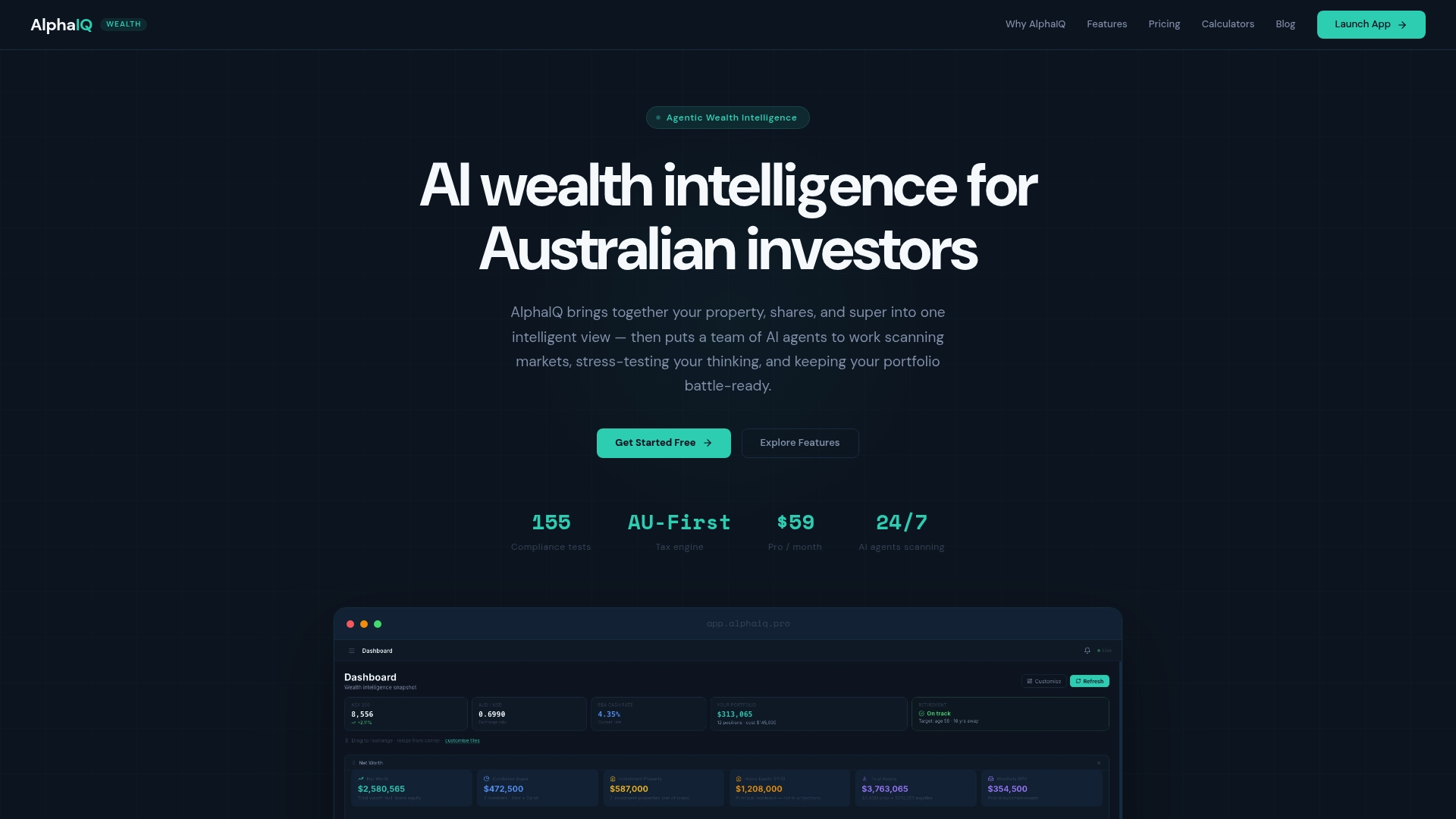
With Alphaiq's tax-aware financial modelling and scenario simulation tools, you can assess how ethical fund choices interact with your capital gains position, superannuation projections, and retirement income targets. Whether you are reviewing your super projections or stress-testing a new ethical ETF allocation, Alphaiq gives you the numbers to make confident decisions. Visit Alphaiq to see how your wealth strategy looks when you run it through a proper model.
FAQ
What is the difference between ESG and ethical investing?
ESG (Environmental, Social and Governance) investing is a specific analytical framework used to evaluate companies, while ethical investing is the broader practice of aligning investments with personal values. ESG is one tool within ethical investing, alongside SRI and impact investing.
Does ethical investing reduce financial returns?
Studies from 2018 to 2025 show sustainable funds often matched or outperformed traditional funds, and demonstrated lower downside risk during volatile markets. Ethical investing does not require sacrificing returns when funds are selected carefully.
How do I avoid greenwashing in ethical funds?
Review the fund's product disclosure statement and actual holdings list rather than relying on its name or marketing. Independent certifications from bodies like the Responsible Investment Association Australasia (RIAA) provide an additional verification layer.
Can I invest ethically through my superannuation?
Yes. Most major Australian super funds offer ethical or ESG-screened investment options within their menu. Switching your super to an ethical option is one of the most significant ethical investment decisions you can make given the scale of capital involved.
What sectors do ethical funds typically include or exclude?
Ethical funds commonly exclude tobacco, weapons, fossil fuels, and gambling. They typically include clean energy, companies with fair labour practices, and businesses with transparent governance structures.