
TL;DR:
- Australian investors should prioritize primary filings, regulator data, and tax-aware modelling for thorough stock research. Building both bull and bear cases based on credible sources and evaluating post-tax outcomes is essential for informed decisions. Alphaiq helps translate research findings into real portfolio strategies by modelling franking credits, CGT, and super interactions efficiently.
For any ASX-listed stock, your first five stops are the company's annual report, ASX announcements, an ASIC company extract, Morningstar analyst notes, and Alphaiq's tax-aware modelling. Each one fills a gap the others leave open.
- ASX announcements: price-sensitive disclosures, capital raises, director changes — lodged in real time at asx.com.au
- Company annual report: full financials, management commentary, stated strategy and R&D outcomes
- ASIC company extract: director history, share structure changes, litigation flags — details media rarely surfaces
- Morningstar analyst notes: qualitative fair-value estimates and forward-risk commentary beyond what a screen shows
- Alphaiq modelling: tax-aware scenario simulation covering franking credits, CGT timing, super interactions and debt recycling
Moneysmart recommends starting with the annual report and comparing current results against stated strategy — that single habit separates disciplined investors from those chasing headlines.
Table of Contents
- What does a complete stock research sources list look like?
- How do you actually use each source?
- How to build a bull case and a bear case for every stock
- What does sound stock research actually cost in time and money?
- How do you turn research into tax-aware portfolio decisions?
- Key takeaways
- Why most investors research the right things in the wrong order
- Alphaiq turns your research into real portfolio decisions
- Useful sources to bookmark
What does a complete stock research sources list look like?
Australian investors have access to more data than they typically use. The challenge is knowing which sources carry genuine authority and which add noise. Here is a grouped catalogue.
Group A — primary company filings
The annual report, investor presentations, and ASX-lodged announcements are your foundation. Annual reports contain audited financials, management discussion, and forward guidance. Investor presentations compress the same material for quick orientation. ASX announcements cover everything from quarterly cash flow reports to takeover bids, lodged the moment they are released to the market. You can find all of these directly on the ASX website or on a company's investor relations page.
Group B — regulator and official sources
- ASX market data and company pages: real-time price data, announcements feed, and company profiles
- ASIC registers and extracts: the ASIC Searches and Lodgements portal lets you purchase a Current and Historical Company Extract, which can expose director changes and historical share structures that media coverage misses. ASIC's own research confirms retail investors routinely overlook this source.
- Moneysmart: ASIC's consumer guidance site, useful for understanding regulatory context and investor rights
ASIC has actively encouraged retail investors to shift from social and secondary news sources toward primary documentation. Regulators trump social tips — every time.
Group C — analyst and broker research
Morningstar Australia covers a broad universe of ASX securities and provides qualitative analyst research including fair-value estimates and forward-looking commentary. CommSec research notes are accessible to account holders and offer broker-level analysis. The key value here is not the number on the screen — it is the analyst's reasoning about what could go wrong.

Group D — market data terminals
Iress and Refinitiv/Reuters/Bloomberg provide institutional-grade market data, depth-of-market feeds, and historical price series. Access is typically via a paid subscription or through a broker platform. For most self-directed investors, these are supplementary rather than primary tools.
Group E — specialised Australian financial news
The Australian Financial Review (AFR) provides local industry context, company interviews, and market commentary that international platforms rarely match for ASX-listed stocks. Access is subscription-based.
Group F — screeners and filtering tools
Public screeners help you narrow a watchlist by revenue growth, dividend yield, or debt ratios. Use them to generate candidates, not conclusions. No public screener models Australian franking credits or debt recycling efficiency — that step requires dedicated modelling.
Group G — community and alternative sources
AGM transcripts, investor-day recordings, and moderated forums like Livewire Markets can surface qualitative signals. Treat everything here as a lead to verify, not a fact to act on.
How do you actually use each source?
Knowing where to look is only half the job. Here is what to check when you open each source.
Annual reports: Compare this year's results against the strategy management stated twelve months ago. Then open the cash flow statement. Experienced investors cross-check cash flow against reported profit specifically to separate accounting profit from real operating cash — non-cash adjustments can make a struggling business look healthy on the income statement. Also check whether R&D spending produced commercial outcomes or simply consumed capital.
ASX announcements: Prioritise price-sensitive announcements, capital raises, director changes, and any takeover-related disclosure. Cross-reference announcement figures against the annual report to catch inconsistencies.
ASIC extracts: Verify director history, check for litigation flags, and note any share structure changes. This is the source most investors skip — and the one that occasionally reveals the most.
Analyst and broker research: Identify the valuation assumptions underpinning any price target, note the forecast horizon, and consider whether the analyst's firm has a commercial relationship with the company. Qualitative commentary on forward risks is often more useful than the target price itself, as Morningstar's research approach demonstrates.
Data terminals and news: Use them for market context and to cross-reference facts. A headline is a prompt to investigate, not a decision.
Pro Tip: When reading a cash flow statement, go straight to "cash flows from operating activities." If this figure is consistently lower than net profit, the company may be recognising revenue it has not yet collected — a meaningful liquidity risk that the income statement alone will not show you.
How to build a bull case and a bear case for every stock
A structured workflow keeps research honest and makes it easier to enter findings into a modelling tool. Follow these five steps for every stock you evaluate.
- Gather primary documents. Collect the most recent annual report, the last four ASX quarterly or half-year announcements, the latest investor presentation, and an ASIC company extract. Timestamp each source so you know how current your data is. Company investor relations pages are a reliable starting point, as Spaceship's research guide notes.
- Run quick quantitative checks. Review revenue trend (three years minimum), operating cash flow, net debt position, and the franking profile of dividends. A simple checklist prevents you from skipping an uncomfortable number.
- Collect qualitative signals. Read management commentary for tone shifts, note analyst forward-risk commentary, and identify any industry headwinds. Record the assumptions behind each signal.
- Write a bull case and a bear case. Each should contain 3–5 bullet reasons and one "key trigger" — the single event or data point that would invalidate the thesis. Forcing yourself to list reasons the thesis could fail reduces confirmation bias and improves decision quality.
- Enter assumptions into a modelling platform. Project tax impacts, franking credit value, and CGT timing across at least two scenarios — one optimistic, one conservative.
Pro Tip: Write your bear case before your bull case. Starting with the reasons not to buy forces you to engage with the evidence rather than rationalise a position you have already emotionally committed to.
| Workflow step | Best sources to consult |
|---|---|
| Gather primary documents | Annual report, ASX announcements, investor presentation, ASIC extract |
| Quantitative checks | Cash flow statement, ASX quarterly reports, dividend history |
| Qualitative signals | Analyst notes (Morningstar, CommSec), AFR, AGM transcripts |
| Bull / bear case | All of the above, cross-referenced |
| Tax-aware modelling | Alphaiq (franking credits, CGT, super, debt recycling) |
What does sound stock research actually cost in time and money?
Set realistic expectations before you start.
- Quick triage: 15–30 minutes per stock, covering the ASX announcements feed and a headline financial check
- Full single-stock deep dive: 3–8 hours depending on business complexity, covering all primary documents, analyst notes, and scenario modelling
- Ongoing monitoring: roughly 30 minutes per week per watchlist item, checking new announcements and news
Free sources to prioritise first:
- ASX announcements and company pages (free)
- ASIC company extracts (small government fee per extract)
- Company annual reports and investor presentations (free via ASX or investor relations pages)
- Moneysmart guidance (free)
- Public news coverage via AFR's free articles and Google News
Paid sources worth considering:
- Morningstar analyst reports: useful when you need qualitative insight on a stock you cannot fully model yourself
- Iress or Refinitiv/Bloomberg terminal access: typically accessed via a broker or institutional subscription; cost is significant for individuals
- Premium screeners and broker research: worthwhile for active investors managing a larger portfolio
The practical rule: pay for analyst coverage when you genuinely need qualitative insight you cannot derive from primary documents. For tax and scenario modelling, a dedicated platform like Alphaiq replaces the need for expensive advisory time. Forbes Advisor's Australian guide also notes that ASIC alerts can be set for free to monitor company lodgements — a simple habit that keeps you current without ongoing effort.
How do you turn research into tax-aware portfolio decisions?
Research is not complete until you model post-tax outcomes. For Australian investors, three factors routinely change the decision: franking credits, CGT timing, and whether the holding sits inside superannuation or a taxable account.
Franking credits attach to dividends paid from tax already paid by the company. A stock yielding 4% fully franked is worth materially more to an Australian investor than the same gross yield from an unfranked dividend, because the franking credit offsets personal tax or generates a refund. Comparing headline dividend yields across jurisdictions without adjusting for franking is a common and costly error.
Key inputs to model for each stock:
- Dividend yield and franking percentage
- Expected holding period and CGT discount eligibility (assets held more than 12 months qualify for the 50% CGT discount for individuals)
- Whether the holding is inside super (where the tax rate on earnings is 15%, or zero in pension phase) or in a personal name
- Debt recycling implications if you are converting non-deductible debt to deductible investment debt
Superannuation considerations:
- Contributions and earnings inside super are taxed at 15% in accumulation phase
- In pension phase, earnings and capital gains on assets supporting the pension are generally tax-free
- The decision to hold a high-franking stock inside versus outside super can shift the effective after-tax return meaningfully
Pro Tip: Model the same stock under at least two holding structures — personal name and super — before deciding where to buy it. The after-tax outcome can differ by several percentage points annually for a fully franked dividend stock, particularly if your marginal tax rate is above 30%.
For ASX dividend investing, understanding the interaction between franking credits and your tax position is one of the highest-value steps you can take before placing a trade.
Key takeaways
The most reliable stock research workflow for Australian investors starts with primary filings and regulator data, builds a bull and bear case from evidence, and finishes with tax-aware modelling before any decision is made.
| Point | Details |
|---|---|
| Start with primary filings | Annual reports, ASX announcements, and ASIC extracts carry more authority than any secondary source. |
| Build both cases | Write a bull case and a bear case for every stock to reduce confirmation bias. |
| Model post-tax outcomes | Franking credits, CGT timing, and super structure materially change the effective return. |
| Use free sources first | ASX, ASIC, Moneysmart, and company annual reports are free and should be exhausted before paying for data. |
| Model with Alphaiq | Alphaiq runs tax-aware scenario comparisons covering franking credits, CGT, super, and debt recycling in one place. |
Why most investors research the right things in the wrong order
The conventional approach — scan the news, check the share price, read a broker note — is backwards. Price and commentary are downstream of the facts; the facts live in the annual report, the cash flow statement, and the ASIC register. By the time a story reaches the AFR or a broker note, the market has usually already priced the obvious interpretation.
What actually separates good research from average research is the discipline to read the primary documents before forming a view, and then to stress-test that view by building a genuine bear case. Most investors skip the bear case entirely. They gather evidence that supports a position they have already decided on, which is not research — it is confirmation.
The tax layer compounds this. An investor who identifies a great business but buys it in the wrong structure, at the wrong time in the tax year, or without accounting for franking credits, can underperform a less-thorough investor who got the tax mechanics right. Research and modelling are not sequential steps. They are the same step.
Alphaiq turns your research into real portfolio decisions
Once you have gathered your primary documents and built your bull and bear cases, the next step is modelling what those findings actually mean for your after-tax position. Alphaiq is built precisely for this: it takes your research inputs — dividend yield, franking percentage, expected holding period, CGT assumptions, super structure — and runs tax-aware scenario comparisons so you can see the real numbers before you commit.
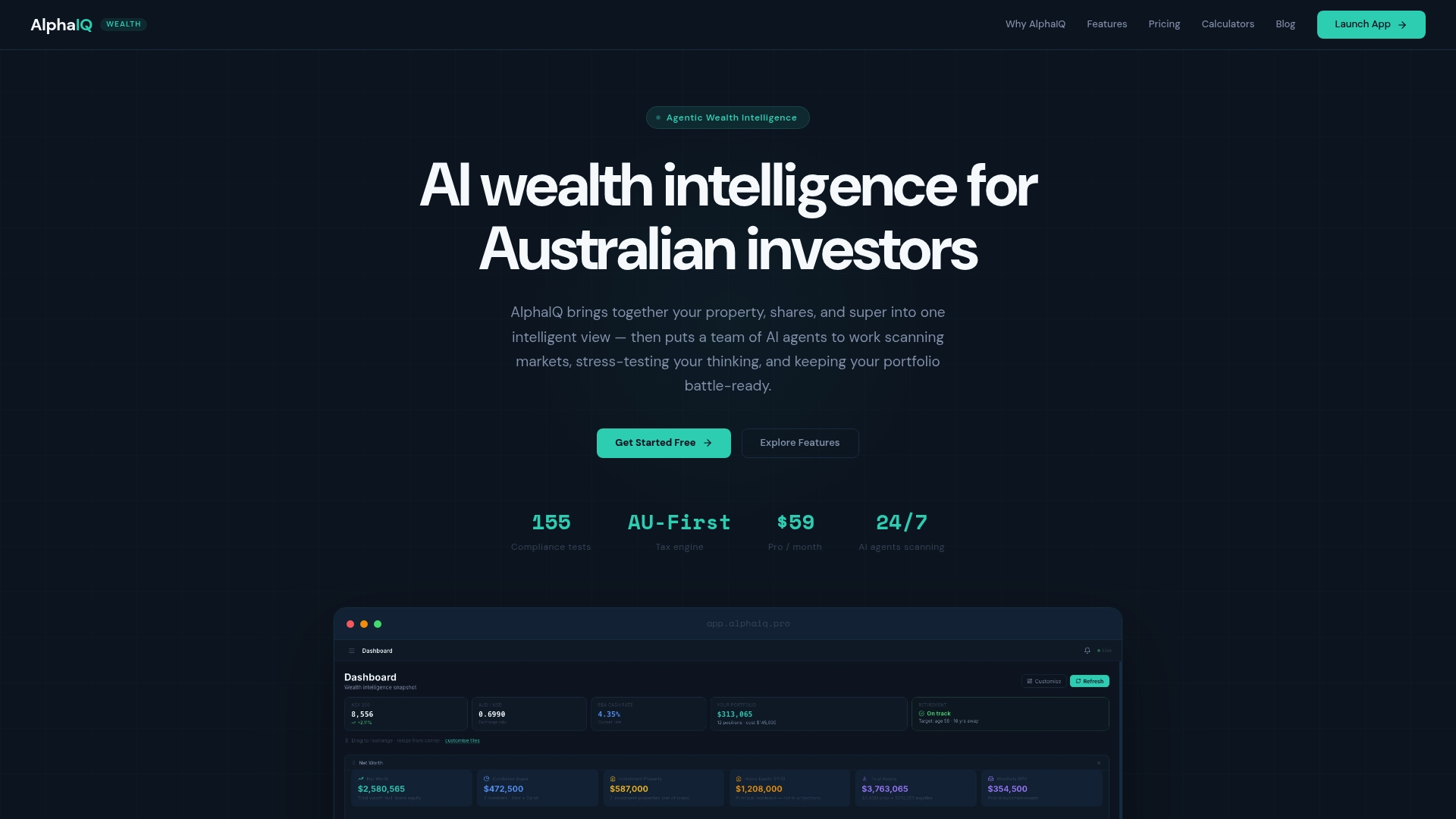
The platform models franking credits, CGT timing, debt recycling, and super interactions in one place, without the cost of ongoing financial advice. For self-directed investors who have done the research and now need to translate it into a portfolio decision, Alphaiq provides the modelling layer that free screeners and broker notes cannot. Start modelling your scenarios on Alphaiq today.
Useful sources to bookmark
Official and authoritative resources every Australian investor should have on hand.
- ASX announcements and company pages — real-time lodgements, price data, and company profiles
- ASIC Searches and Lodgements — company extracts, director registers, and company alerts
- Moneysmart — choosing shares to buy — ASIC's investor guidance on evaluating companies
- Morningstar Australia — analyst research, fair-value estimates, and fund data
- How to research stocks — Motley Fool Australia — practical walkthrough of financial statement analysis
- How to research a stock — Spaceship — beginner-friendly guide to compiling primary documents
- Guide to researching stocks from Australia — Forbes Advisor — covers prospectuses, ASX lodgements, and ASIC alerts
Setting up alerts: ASIC's free company alert service sends email notifications when a monitored company lodges a document — floats, takeovers, director changes. Set one for every stock on your watchlist. The ASX also lets you create a watchlist and follow announcements directly from your account.
| Source | What it gives you | Cost |
|---|---|---|
| ASX announcements | Real-time price-sensitive disclosures | Free |
| ASIC company extract | Director history, share structure, litigation flags | Small government fee |
| Company annual report | Audited financials, strategy, management commentary | Free |
| Moneysmart | Regulatory guidance and investor education | Free |
| Morningstar Australia | Analyst research, fair-value estimates | Paid subscription |
| AFR | Local industry context and company interviews | Paid subscription |
| Iress / Refinitiv / Bloomberg | Institutional market data and terminals | Paid (broker or institutional) |
This article provides general information only and is not financial advice. Confirm current tax rules and regulatory requirements with the ATO, ASIC, or a qualified financial professional before making investment decisions.